

Contents
If you are wondering what a DHEA saliva test measures in relation to cortisol: it determines the DHEA level in saliva; in the extended stress profile, cortisol and DHEA are examined on a saliva-based basis. You collect the samples yourself at home, send them to the laboratory and then receive a report. The crucial point is: individual values should not be assessed in isolation, but together with symptoms, daily routine, lifestyle and other laboratory parameters.
For stress management, a DHEA saliva test is not the measure itself, but one component for interpretation. It can help to better understand hormonal connections, but does not replace a medical diagnosis. In the case of abnormal results, severe symptoms or the use of hormone preparations, you should seek medical advice.
What is measured in saliva?
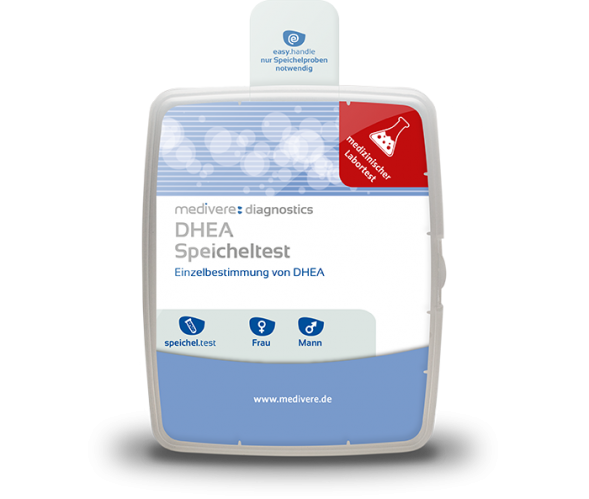
DHEA is a hormone that can be determined as an individual value in saliva tests. DHEA is often considered in connection with hormonal balance, resilience and regeneration and may be useful as part of an extended stress or hormone analysis. The Medivere Speicheltest DHEA serves precisely this determination of the DHEA level in saliva.
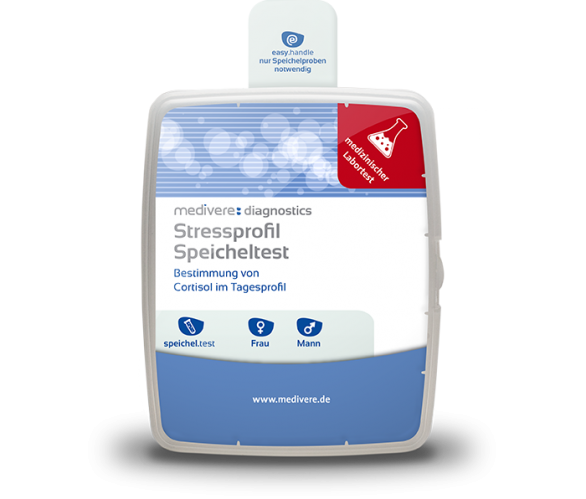
The Medivere Stressprofil – Cortisol & DHEA Speicheltest is a laboratory-based examination for assessing stress-related regulatory patterns in the body. The profile is saliva-based, non-invasive and designed to be carried out at home. It can serve as a basis for further counselling.
It is important to distinguish: a single DHEA value does not automatically describe your entire stress situation. It is more useful to consider it together with your daily pattern, sleep times, eating rhythm, physical activity, medication, cycle phase and subjective symptoms.
Who may find a DHEA or stress profile interesting?
A DHEA test is suitable for people who want an additional assessment of their hormonal status. In the product information, it is mentioned in particular in the context of exhaustion, reduced resilience or holistic hormone profiles. The stress profile may be useful in cases of persistent stress, tiredness and exhaustion, sleep problems, inner restlessness, as well as problems with stress tolerance and regeneration.
This does not mean that the test automatically explains the cause of these issues. It provides laboratory values that only become more meaningful through interpretation. Especially with long-lasting symptoms, it is important to also consider nutrition, workload, exercise, alcohol, caffeine, medication and existing diagnoses.
If you are already dealing with cortisol and everyday influences, our article Cortisol levels and stress management: effective strategies is a suitable addition. In the case of persistent tiredness, the article Constant tiredness despite sleep – when metabolism may play a role can also provide guidance.
Procedure at home: how to prepare for sample collection
The advantage of a saliva test lies in its simple use: no blood draw, no time in a practice for sample collection, but sample collection according to instructions at home. Read the test instructions in full before you begin. Prepare the tubes, labels, time schedule and return documents.
Plan the test day to be as calm and realistic as possible. Do not artificially change your diet just to obtain “better” values. If you normally eat 50 g of oats with yoghurt in the morning, a vegetable stir-fry with rice at lunchtime and bread with cheese or pulses in the evening, document exactly that. Two cappuccinos, a glass of wine the evening before or late eating should also be included in the notes if they are part of your everyday routine.
A short checklist the evening before is practical:
- Read the test instructions and mark the sample times.
- Set an alarm or calendar reminders for the collection times.
- Make a note of medication, hormone preparations and food supplements.
- Document special events: night shift, travel, infection, very intensive sport, unusual stress.
- Clearly label the tubes if this is specified in the instructions.
Do not stop prescribed medication on your own. If you are unsure whether a preparation could influence the evaluation, clarify this in advance with your doctor or the professional supporting you.
Typical mistakes with saliva samples
Many unclear findings do not arise in the laboratory, but through small mistakes during sample collection. It is therefore worth following the instructions closely. The specified times and intervals from eating, drinking, brushing teeth or chewing gum are particularly important.
Common pitfalls are:
- Wrong time: If several samples are planned, the time points should not be mixed up.
- Contamination: Blood in the saliva, lip care products, food residues or drink residues can make the sample unusable.
- Too little saliva: Allow yourself enough time instead of collecting under time pressure.
- Incomplete information: Without information on medication, cycle, sleep times or shift work, important context is missing.
- Tubes mixed up: Label each sample immediately and check the order.
Even a “perfect” test day is not always useful. If you usually drink coffee every day but suddenly stop on the test day, the day may not reflect your normal everyday routine. Follow the specifications of the test kit and document deviations honestly.
Evaluation: why professionals are important
A laboratory value often appears clear, but on its own it rarely is. A DHEA value can be considered in connection with symptoms, daily profiles and other laboratory parameters. With the stress profile, symptoms, lifestyle and medical history should be included.
In counselling, the focus is therefore not on a hasty interpretation such as “too high” or “too low”, but on questions such as: When do symptoms occur? What do sleep and working hours look like? Is there shift work, intensive sport, long breaks between meals or a very restrictive diet? Which findings are already available?
Nutrition can also be important as context. For example, note whether you regularly eat breakfast, how much protein you consume and whether long breaks occur between meals. A daily log with quantities may be sufficient: 2 slices of wholegrain bread with 40 g of cheese, 150 g of skyr with berries, 120 g of lentils with vegetables or 1 portion of fish with potatoes. Such information does not replace laboratory evaluation, but makes interpretation in the discussion easier.
Please do not derive any self-treatment from a laboratory value, especially not with hormone preparations. In the case of abnormal results, marked exhaustion, newly occurring symptoms or existing illnesses, a doctor should be involved.
How to use the report sensibly
Do not look at your report in isolation, but together with a short log. Helpful information includes bedtime, wake-up time, meals, caffeine quantity, physical activity, workload, cycle phase and preparations taken. The more precise this information is, the better the counselling can be tailored to your everyday life.
Frequently asked questions
What does a DHEA saliva test measure in relation to cortisol?
A DHEA saliva test determines the DHEA level in saliva. In the extended stress profile, cortisol and DHEA are examined on a saliva-based basis.
How does a DHEA or cortisol-DHEA saliva test at home work?
You collect the samples yourself at home according to the instructions, send them to the laboratory and then receive a report. Before collecting the samples, you should read the test instructions in full and prepare the tubes, labels, time schedule and return documents.
How should you interpret the results of a DHEA saliva test?
Individual values should not be assessed in isolation, but together with symptoms, daily routine, lifestyle and other laboratory parameters. In the case of abnormal results, severe symptoms or the use of hormone preparations, you should seek medical advice.
At the Centre for Prevention and Nutrition in Berlin, nutritional consultant Olha Bezuhla supports you in bringing laboratory findings, nutrition and lifestyle together in a structured way. If you are planning a DHEA saliva test or a cortisol-DHEA profile, or already have results, you can discuss the next steps together. Request counselling
This article is for general information and does not replace medical advice, diagnosis or treatment.
{“@context”:”https://schema.org”,”@graph”:[{“@type”:”FAQPage”,”mainEntity”:[{“@type”:”Question”,”name”:”What does a DHEA saliva test measure in relation to cortisol?”,”acceptedAnswer”:{“@type”:”Answer”,”text”:”A DHEA saliva test determines the DHEA level in saliva. In the extended stress profile, cortisol and DHEA are examined on a saliva-based basis.”}},{“@type”:”Question”,”name”:”How does a DHEA or cortisol-DHEA saliva test at home work?”,”acceptedAnswer”:{“@type”:”Answer”,”text”:”You collect the samples yourself at home according to the instructions, send them to the laboratory and then receive a report. Before collecting the samples, you should read the test instructions in full and prepare the tubes, labels, time schedule and return documents.”}},{“@type”:”Question”,”name”:”How should you interpret the results of a DHEA saliva test?”,”acceptedAnswer”:{“@type”:”Answer”,”text”:”Individual values should not be assessed in isolation, but together with symptoms, daily routine, lifestyle and other laboratory parameters. In the case of abnormal results, severe symptoms or the use of hormone preparations, you should seek medical advice.”}}]}]}
This article is for general information only and does not replace medical advice or treatment.

Nutrition scientist (postdoctoral research, Potsdam)