




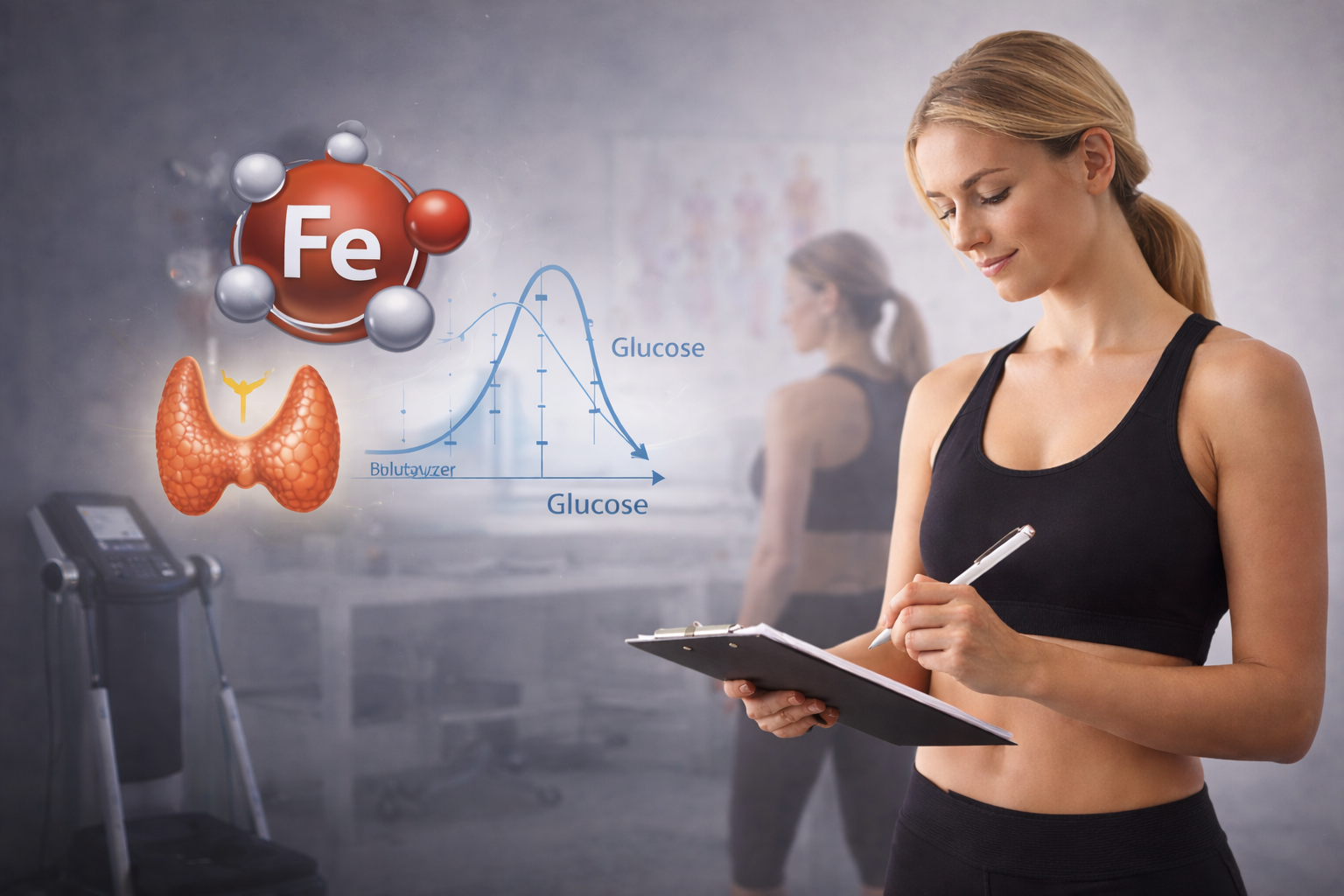
Persistent tiredness is one of the most common health concerns in modern everyday life.
Many people affected report that they sleep enough, yet still feel permanently exhausted. Their subjective sense of energy seems reduced, even though there is no obvious sleep disorder.
While psychological stress or sleep quality are often the main focus, metabolic factors are less frequently considered systematically. Yet metabolic processes can contribute significantly to an individual’s perception of energy.
At the Zentrum für Prävention und Ernährung, such complaints are classified in a structured way in a preventive context – taking into account body composition, lifestyle and progression over time.
Constant tiredness – possible causes
Tiredness is often multifactorial. In addition to psychosocial factors, the following areas may be considered, among others:
• glucose metabolism and insulin sensitivity
• iron status
• thyroid function
• chronic low-grade inflammatory processes
• body composition
Latimer (2023) describes fatigue as one of the most common symptoms in primary care:
An objective and structured classification helps to identify relevant factors and avoid unnecessary diagnostics.
Tiredness despite sleep – the role of glucose metabolism
Energy at the cellular level is generated through complex metabolic processes.
Marked fluctuations in blood glucose can be associated with reduced performance, concentration problems or rapid fatigability. Insulin sensitivity also influences the efficiency of glucose utilisation.
Stable metabolic regulation may therefore also play a role in the context of subjective energy.
Body composition as a metabolic marker
It is not body weight alone, but in particular the ratio of fat to muscle mass, that influences metabolic processes.
Muscle tissue is the most important peripheral organ for glucose uptake
Visceral adipose tissue is associated with pro-inflammatory signalling pathways (Després, 2012)
Body composition can therefore provide relevant indications of structural metabolic changes in a preventive context.
Iron status and subclinical deficits
A reduced ferritin level can be associated with tiredness even without manifest anaemia.
Clénin (2017) describes the clinical significance of iron deficiency without anaemia
Assessment is always carried out in a medical context and does not replace medical diagnostics.
Modern living conditions and metabolic adaptation
Time pressure, predominantly sedentary work, low everyday physical activity and irregular meal structure can influence metabolic processes over the long term.
Metabolic changes usually do not occur abruptly, but develop gradually.
Structured monitoring over time makes it possible to classify developments in a comprehensible way.
Structured metabolic analysis in a preventive context
At the Zentrum für Prävention und Ernährung, initial metabolic situations are classified systematically.
In addition to the medical history, body composition is recorded by means of bioelectrical impedance analysis (BIA).
The method is considered scientifically established:
The focus includes, among other things:
• muscle mass
• fat mass
• visceral fat indicators
• progression over defined time intervals
The analysis serves structured preventive classification and does not replace medical diagnostics.
Nutrition and energy in a preventive framework
The stabilisation of metabolic processes can be supported by structured nutritional approaches.
The focus includes, among other things:
• regular meal structure
• sufficient protein intake
• differentiated carbohydrate distribution
• individual assessment of micronutrient status
Micronutrients frequently considered as part of nutritional counselling include, among others, Magnesiumcitrat and Vitamin B12 Tropfen: magnesium contributes to a reduction of tiredness and fatigue and to normal muscle function; vitamin B12 contributes to the normal functioning of the nervous system, to normal energy-yielding metabolism, to normal red blood cell formation and to a reduction of tiredness and fatigue. Ashwagandha Fusion Complete is a formulation with KSM-66® ashwagandha root extract and other plant extracts. Food supplements are not a substitute for a balanced, varied diet and a healthy lifestyle. The stated recommended daily intake must not be exceeded.
Harkin et al. (2016) show that systematic monitoring supports sustainable goal achievement:
In a preventive context, the focus is not on short-term intervention, but on long-term stability.
When can structured classification be useful?
In cases of persistent tiredness despite sufficient sleep, an objective metabolic assessment can provide orientation – especially if:
• there is no clear cause
• energy levels have been reduced over a longer period
• additional metabolic risk factors are present
A structured analysis can present connections in a comprehensible way and document developments over time.
You can find more information on metabolic analysis in the
“Metabolic Analysis / Prevention Programmes” section of the Zentrum für Prävention und Ernährung.
Summary
Constant tiredness despite sufficient sleep is often multifactorial.
In addition to psychological and sleep-related factors, metabolic processes may be relevant.
It is not only body weight, but in particular body composition, glucose metabolism and structural lifestyle habits that influence the perception of energy.
A differentiated preventive classification enables an objective and comprehensible consideration of possible connections.
Literature
DEGAM. S3-Leitlinie Müdigkeit. 2023.
Latimer KM. Fatigue in Adults: Evaluation and Management. 2023.
Reaven GM. Role of Insulin Resistance in Human Disease. 1988.
Després JP. Body fat distribution and cardiovascular risk. 2012.
Clénin GE. Treatment of iron deficiency without anaemia. 2017.
Kyle UG et al. Bioelectrical impedance analysis. 2004.
Sergi G et al. Bioelectrical impedance analysis review. 2015.
Harkin B et al. Monitoring progress toward goals. 2016.
This article is for general information only and does not replace medical advice or treatment.
Owner and founder of the Zentrum für Prävention und Ernährung in Berlin. Entrepreneur and project manager with more than 15 years of experience leading international projects in health and education. Responsible for building, strategy and day-to-day management of the centre.