



Contents
If you would like to include bitter spray in your diet, the most important guidance is simple: it does not replace bitter foods, but it can be a practical addition around meals. Bitter compounds used to be a more natural part of many culinary herbs, salads and vegetables. Today, many people mainly eat foods that are mild, sweet or salty – and therefore quickly find a bitter taste unfamiliar.
In this article, you will find out which foods provide bitterness, why it has disappeared from many meal plans and how you can use a bitter spray in an everyday-friendly way – without complicated rules.
Why bitter foods have become less common
Bitterness is an intense taste. Many people learn early on to prefer sweet and mild foods. At the same time, numerous types of vegetables and salad leaves have been bred over decades so that they taste less bitter and are more readily accepted.
Modern everyday life also plays a role. Ready meals, sweet snacks, white flour products and heavily seasoned dishes often dominate the diet. Bitter components such as radicchio, chicory, rocket, endive or wild herbs, by contrast, often only appear on the plate occasionally.
Another point: bitterness takes getting used to. Anyone who has eaten hardly any bitter foods for a long time may find even small amounts harsh. This is not a mistake, but a question of taste training. Many people accept bitter foods better when they are combined with acidity, a little fat, nuttiness or mild sweetness.
Bitter foods: concrete ideas for your plate
The best way to become familiar with bitter compounds is through a varied selection of foods. This is not about eating large quantities. Even small portions can help make the taste more familiar again.
Suitable foods and simple amounts
- Chicory: 1 small head, raw in a salad or briefly pan-fried.
- Radicchio: 1 to 2 handfuls mixed with mild leaf lettuce.
- Rocket: 1 handful on bread, pasta, roasted vegetables or in bowls.
- Endive: 1 to 2 handfuls, finely sliced, combined with apple or potatoes.
- Artichoke: as a vegetable side dish or in a small amount on an antipasti plate.
- Grapefruit: 1/2 fruit, provided it is individually tolerated and no interactions with medication need to be taken into account.
- Cocoa: 1 teaspoon of unsweetened cocoa powder in porridge or yoghurt.
- Herbs: dandelion, yarrow or wormwood are traditionally used in bitter herbal preparations.
A mild combination is suitable for getting started: radicchio with orange, walnuts and olive oil; chicory with yoghurt dressing and apple; rocket with tomatoes, Parmesan and pumpkin seeds. Bitter does not have to taste harsh or unpleasant – preparation often makes the difference.
Bitter spray: a practical addition around meals
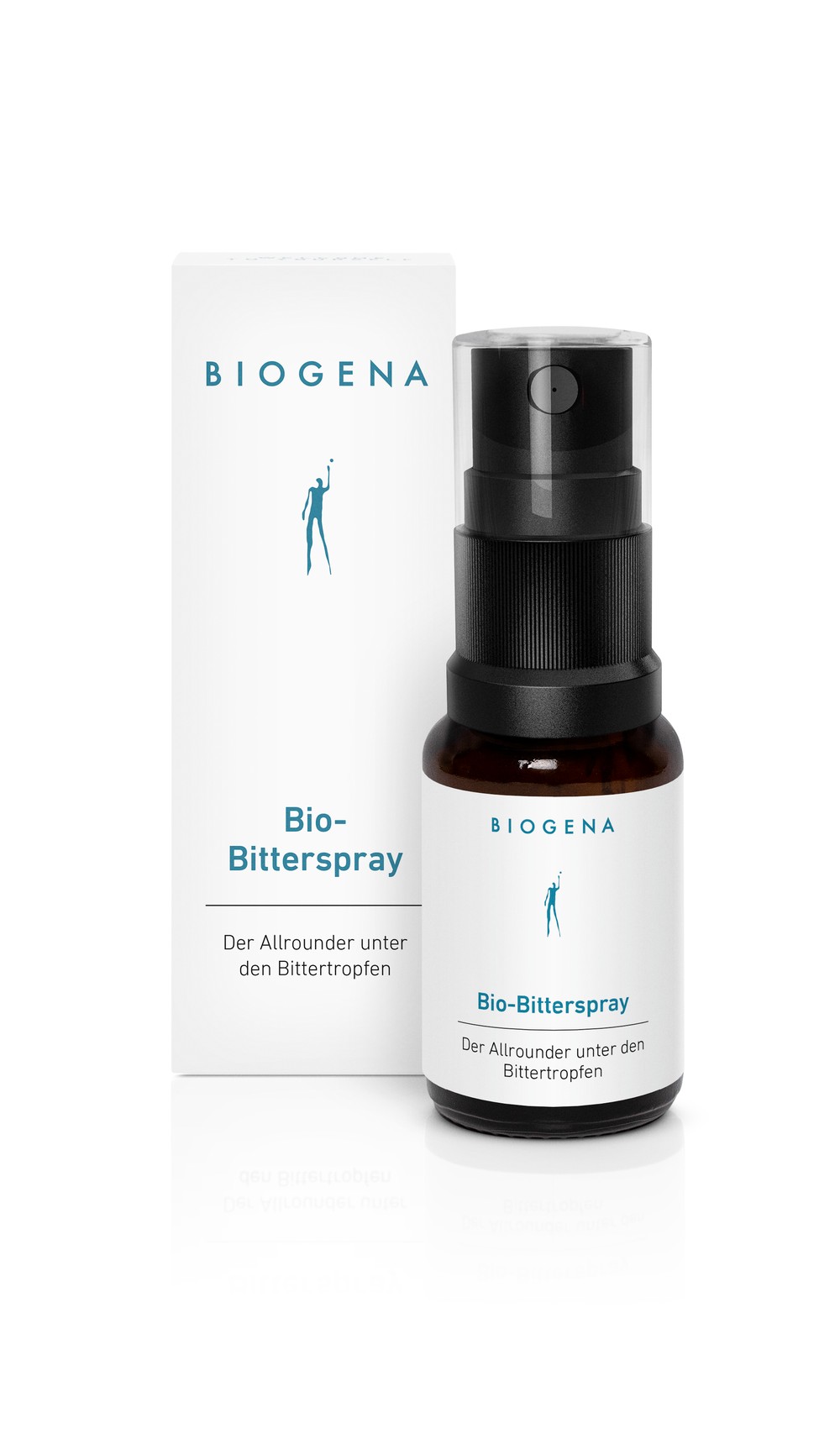
A bitter spray is particularly interesting for people who rarely eat bitter foods in everyday life or are looking for a simple solution when out and about. The Biogena Bio-Bitterspray contains extracts from 9 herbs in organic quality. It is designed as a spray and is easy to use before or after meals.
The pack size is 20 ml and, according to the product information, is sufficient for approx. 130 sprays. This makes it small enough for a bag, desk or kitchen. The advantage lies less in a special ritual and more in the uncomplicated use: a brief bitter taste stimulus around a meal, without you first having to prepare foods.
Important: bitter compounds are a traditional part of the diet, but today they are often consumed only in small amounts. A spray can complement this gap in terms of taste, but should not replace variety on the plate.
How use can look in everyday life
- Before eating: for example before a main meal, if you would like to consciously include bitterness in your eating routine.
- After eating: if you prefer to place the bitter taste at the end of the meal.
- When out and about: for example at the office, while travelling or when no bitter foods are available.
- As a reminder: place it visibly next to spices or the tea tin so that it does not remain unused in the cupboard.
Start cautiously and follow the information on the product. A bitter taste may be clearly perceptible, but should not be forced to the point of being unpleasant.
Typical mistakes with bitter foods and bitter spray
The most common mistake is starting too quickly. Anyone who switches from zero to large portions of radicchio, grapefruit and herbal preparations often loses motivation after just a few days. A small, regular contact with bitterness is better.
- Quantities that are too large: Start with a handful of rocket or a few strips of radicchio in a mixed salad.
- Only trying it plain: Bitter foods become more pleasant with oil, lemon, yoghurt, nuts or a little fruit.
- Confusing bitter with burnt: Roasted aromas can be pleasant; burnt foods are not a culinary substitute for bitter compounds.
- Seeing bitter spray as a substitute for nutrition: A spray is practical, but vegetables, herbs and salads remain important.
- Irregular use: A fixed situation, such as around lunch or dinner, makes the routine easier.
- Ignoring the recommended amount: Follow the manufacturer’s consumption recommendation.
If you take medication, are pregnant, breastfeeding or react uncertainly to certain foods, please have the selection clarified individually. This applies especially to very intensive herbal preparations and grapefruit.
A simple 14-day plan for more bitterness
A structured start helps you build new habits without pressure. If you are generally interested in sustainable changes, our article on sustainable dietary change also fits well with this.
- Days 1–3: add 1 handful of rocket to an existing meal each day.
- Days 4–6: mix chicory or radicchio in small amounts with a mild salad.
- Days 7–9: stir 1 teaspoon of unsweetened cocoa into porridge, quark or yoghurt.
- Days 10–12: plan a warm meal with a bitter component, such as pan-fried chicory with potatoes and egg.
- Days 13–14: consciously test bitter spray before or after a meal and observe whether its use fits into your everyday life.
Make a brief note of which variations you like. Many people are more likely to stick with it when bitterness is understood not as an obligation, but as a new flavour direction.
Frequently asked questions about bitter spray
Does bitter spray taste very intense?
Yes, a bitter taste is intentional. How intensely it is perceived varies from person to person. Anyone who is hardly used to bitter flavours should start slowly and follow the product recommendation.
Can I just eat bitter foods instead?
Yes, a food selection rich in bitter compounds is a very good basis. A spray is mainly practical when shopping, preparation or everyday life currently leaves little room for bitter ingredients.
Does bitter spray go with every meal?
It is used around meals, before or after eating. You can try out individually whether it is most pleasant for you at breakfast, lunch or dinner.
Food supplements are not a substitute for a balanced, varied diet and a healthy lifestyle. The stated recommended daily intake must not be exceeded.
If you would like to expand your diet in an everyday-friendly way, we will be happy to support you personally at the Zentrum für Prävention und Ernährung in Berlin. Request counselling.
This article is for general information and does not replace personal advice in individual cases.
{“@context”:”https://schema.org”,”@graph”:[{“@type”:”FAQPage”,”mainEntity”:[{“@type”:”Question”,”name”:”Does bitter spray taste very intense?”,”acceptedAnswer”:{“@type”:”Answer”,”text”:”Yes, a bitter taste is intentional. How intensely it is perceived varies from person to person. Anyone who is hardly used to bitter flavours should start slowly and follow the product recommendation.”}},{“@type”:”Question”,”name”:”Can I just eat bitter foods instead?”,”acceptedAnswer”:{“@type”:”Answer”,”text”:”Yes, a food selection rich in bitter compounds is a very good basis. A spray is mainly practical when shopping, preparation or everyday life currently leaves little room for bitter ingredients.”}},{“@type”:”Question”,”name”:”Does bitter spray go with every meal?”,”acceptedAnswer”:{“@type”:”Answer”,”text”:”It is used around meals, before or after eating. You can try out individually whether it is most pleasant for you at breakfast, lunch or dinner.”}}]}]}
This article is for general information only and does not replace medical advice or treatment.

Nutrition scientist (postdoctoral research, Potsdam)